


Boulder County just rolled back its fire restrictions—right as we close the book on one of the hottest, driest, most fuel‑parching summers in recent history. The county says “improved conditions” justify easing the bans, yet rainfall has been almost impossible to come by within county limits, Extreme Drought now blankets 84% of the county, and fuel moisture is objectively worse today than when restrictions were last ramped up back in late June. It begs a very reasonable question: what exactly has improved? We break down the data behind the decision and examine why Boulder County’s fire environment remains primed as we step closer to autumn—historically one of our area’s most volatile fire seasons in recent years.
Go Premium, get all the perks.
Daily Forecast Updates
Get our daily forecast discussion every morning delivered to your inbox.
All Our Model Data
Access to all our Colorado-centric high-resolution weather model graphics. Seriously — every one!
Ski & Hiking Forecasts
6-day forecasts for all the Colorado ski resorts, plus more than 120 hiking trails, including every 14er.
Smoke Forecasts
Wildfire smoke concentration predictions up to 72 hours into the future.
Exclusive Content
Weekend outlooks every Thursday, bonus storm updates, historical data and much more!
No Advertisements
Enjoy ad-free viewing on the entire site.
F
ire restrictions across unincorporated Boulder County were officially relaxed on September 9, 2026, marking the end of the summertime burn rules that went into effect June 30—just ahead of the fireworks-heavy Fourth of July period. The county’s update shifts the landscape notably:
- West Boulder County: Stage 2 ➜ Stage 1
- East Boulder County: Stage 1 ➜ No Restrictions

Stage 1 still prohibits most forms of open burning—campfires, charcoal grills, personal fireworks—and limits several other ignition‑related activities.

But the county’s justification for easing restrictions (“improved weather conditions, reduced fire danger, and increased availability of firefighting resources”) deserves a closer look, especially given the meteorological backdrop of this summer.
A Summer That Was Anything but “Improved”
Boulder just endured one of its hottest, driest summers on record, driven by a stubbornly unfavorable pattern across the Southwest. The monsoon technically “arrived,” but it was weak, inconsistent, and largely ineffective at delivering meaningful moisture to Colorado. During the exact 10-week window that the stricter restrictions were in place (June 30–September 9), Boulder logged just 1.56 inches of rainfall—the 3rd driest such period since 1950.

Across the county, precipitation over the last 60 days has been well below normal, with the highly populous southeast quadrant faring worst.

Drought Intensification
Drought has only worsened in the county through the summer, now with 84% in Extreme Drought, up from the 11% back on June 30th.

A majority of the county has degraded one drought classification level over this time period.

Fuel Moisture is Still Running Low
While drought categories and rainfall deficits paint the broad backdrop, fuel moisture is what actually determines how fast a fire ignites, spreads, and intensifies. And right now, area fuels are carrying mid‑to‑late‑summer dryness well into September, with no meaningful recovery yet.
Energy Release Component (ERC) and Burn Index (BI) values in Boulder County are higher than they were on June 30, sitting near the 90th percentile—a level that signals vegetation capable of supporting hot-burning, rapidly spreading and hard to extinguish fires.


Why Haven’t We Had Red Flag Warnings?
It’s been more than a month since Colorado last saw a Red Flag Warning, but that’s not evidence of “reduced fire danger.” Summer climatology rarely supports Red Flag criteria here because:
- Winds are typically lighter
- Monsoon moisture boosts relative humidity
This is normal for July and August. It does not mean fuels are magically healthy or fire risk is low.

As we move into late September and October, the jet stream will begin its seasonal southward shift (hopefully with rain and snow accompanying it). Stronger winds interacting with dry air will increase the frequency of dangerous fire weather days in the Boulder area, even as temperatures cool. Early autumn is historically, at least in recent times, one of Colorado’s most volatile fire seasons, especially during drought years.


Presently, dangerous fire conditions are less than 100 miles away, just over the border in Wyoming.

Final Thoughts
Boulder County’s decision to relax restrictions is understandable from a resource‑management standpoint, but the meteorological justification—“improved weather conditions” and “reduced fire danger”—is difficult to support with the data. Fuels remain critically dry, it’s barley rained all summer and drought has intensified dramatically.
We respect the county’s authority and accept the decision, but we urge the community to remain exceptionally vigilant with any fire‑related activity. Under extreme drought, even a single stray spark can escalate into a county‑wide problem. And as history has shown — most notably with the Marshall Fire — destructive blazes can ignite without Red Flag Warnings or active fire bans in place.
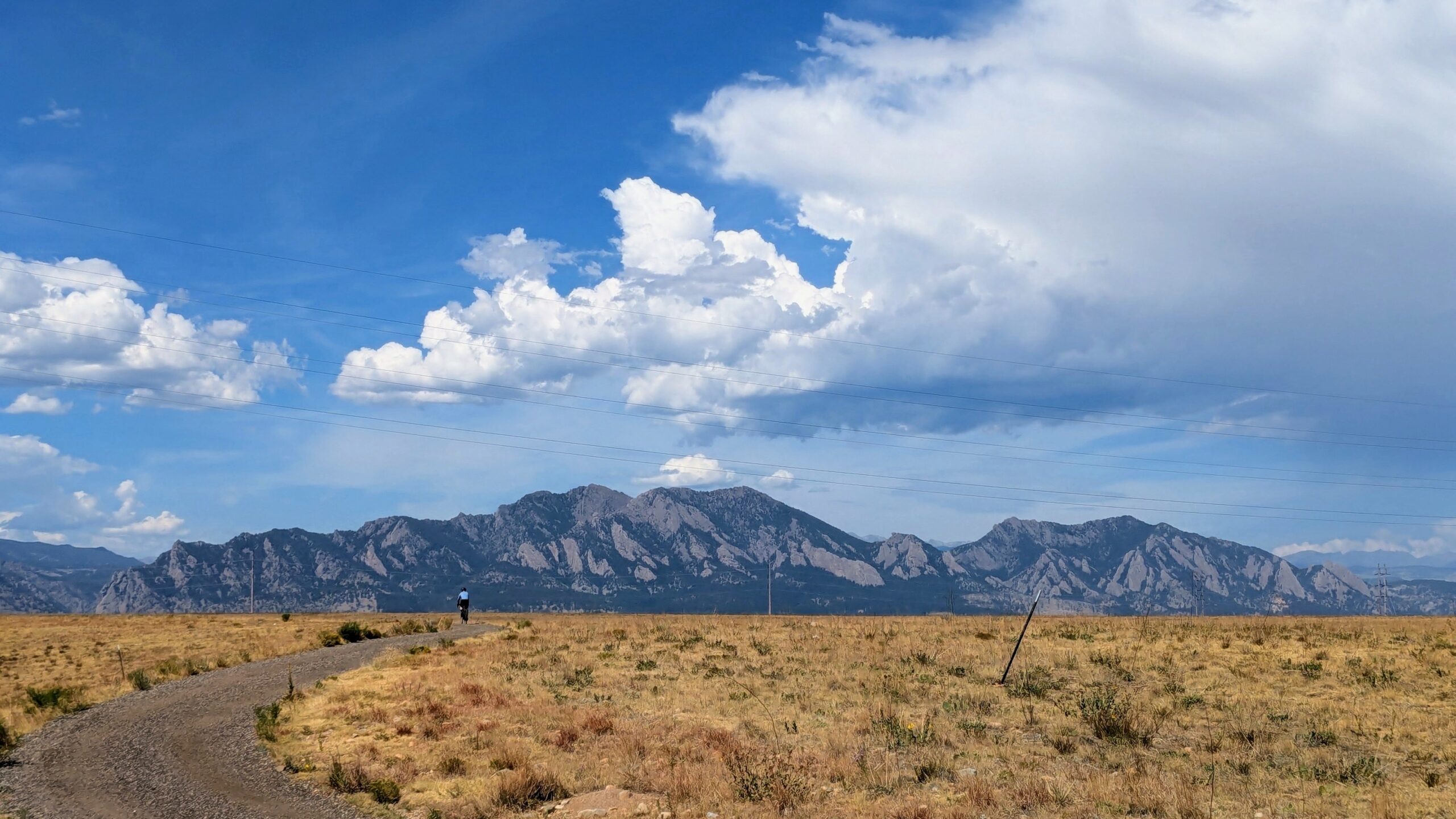
Extreme Drought-stricken and very brown southeast Boulder County (late August 2026)
Spread the word, share our crazy Colorado weather:
Go Premium, get all the perks.
Daily Forecast Updates
Get our daily forecast discussion every morning delivered to your inbox.
All Our Model Data
Access to all our Colorado-centric high-resolution weather model graphics. Seriously — every one!
Ski & Hiking Forecasts
6-day forecasts for all the Colorado ski resorts, plus more than 120 hiking trails, including every 14er.
Smoke Forecasts
Wildfire smoke concentration predictions up to 72 hours into the future.
Exclusive Content
Weekend outlooks every Thursday, bonus storm updates, historical data and much more!
No Advertisements
Enjoy ad-free viewing on the entire site.





You must be logged in to post a comment.