

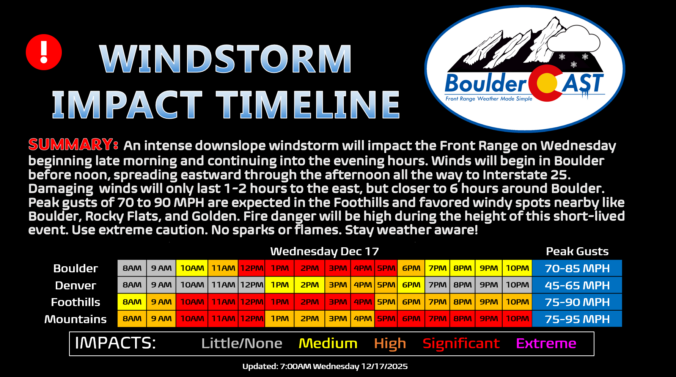
Hold onto your hats, Colorado—today’s forecast isn’t just another breezy afternoon. A fast‑developing mountain wave event is lining up to deliver some of the strongest winds we’ve seen in quite some time, with Boulder squarely in the bullseye for this event. We’re talking winds that can go from calm to extreme in minutes, near-critical fire danger with every gust, and even the likelihood of planned and unplanned power outages. Add in mountain snow squalls and a sharp cold front tonight, and it’s definitely a busy day in Colorado weather. Read on for the full breakdown of timing, impacts, and what you need to know to stay safe as the event unfolds.
Category: Climatology (Page 11 of 75)
These posts contain information about the long-term weather patterns of Boulder County. Potential topics may include 30-day weather outlooks, El Nino/La Nina, and seasonal forecasts. You will find less about the day-to-day weather, with more focus on longer trends and patterns.
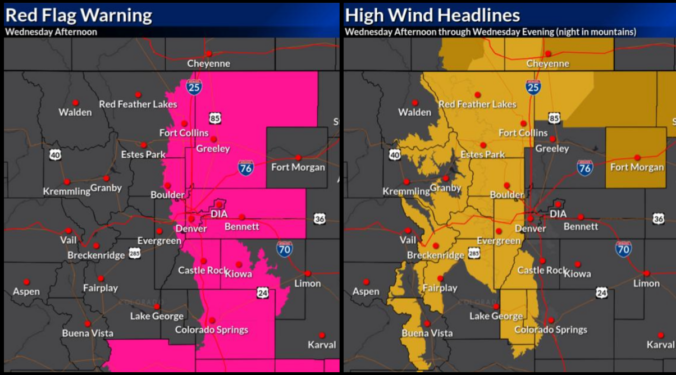
If you thought Monday’s sunshine was the start of a quiet week, think again. The next 48 hours will bring a dramatic shift in our weather —starting with breezy but pleasant conditions Tuesday, then escalating into a powerful downslope windstorm with heightened fire danger on Wednesday. And just when you think it’s wrapping up, a sharp cold front will crash the party with blustery conditions and even a chance for rain and snow Wednesday evening.
We’ll break down what to expect, where the strongest winds will hit, and how this event stacks up against the day of the Marshall Fire. Plus, we’ll look at the potential for Xcel power shutoffs (spoiler: it’s going to be happen).
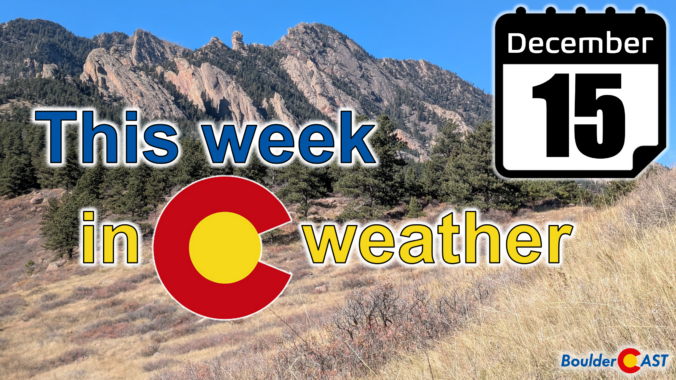
The Front Range has been defined by relentless warmth, gusty winds, and bone‑dry conditions of late—and that theme isn’t breaking anytime soon. Even with a strong cold front charging through midweek, the cooldown will be pitiful, dropping us only back to “normal” while lasting only a single day, and it comes at the price of near‑critical fire danger beforehand. With highs hovering near or above 60° almost every day leading into Christmas and precipitation chances close to zero, a brown holiday is essentially guaranteed for the Boulder–Denver area. Read on for our full outlook of our weather heading into the holiday period.
Apologies for the delay, but with Boulder’s record-shattering latest first snow of the season officially in the bag back on November 29th, it’s time to announce the winners of our 11th Annual First Snowfall Contest. Were you one of them?
The Front Range finally saw its first real snow of the season last week, with Boulder picking up about 8 inches and the Foothills a bit more. The Mountains then cashed in over the weekend, stacking up one to four feet of powder. While this moisture is a welcome boost to our lagging snowpack, it’s not enough to erase drought concerns—but fire risk this year looks very different than the setup before the Marshall Fire. Looking ahead, the story shifts from snow to wind: multiple high‑wind events are on tap for the Foothills this week, while Boulder and Denver stay mostly dry and mild with highs in the 50s to 60s with occasional breeziness. Read on for the full breakdown of this week’s weather.
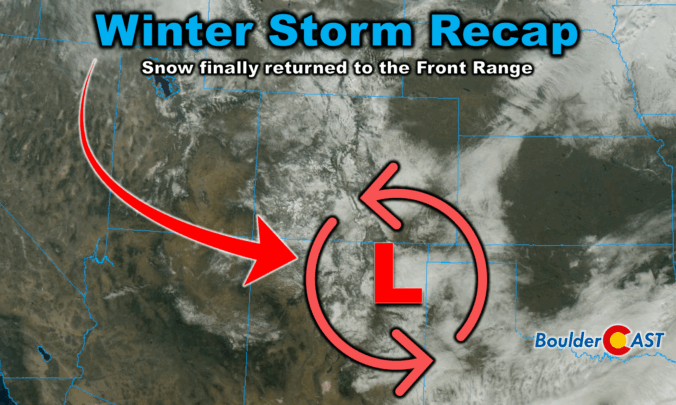
Winter finally showed up in style this week along the Front Range. After a sluggish start to the season, our first true snowstorm delivered nearly 18 hours of steady flakes, painting Boulder, Denver, and much of Colorado in white. But this wasn’t just a simple upslope event—there were some fascinating atmospheric twists that kept the snow machine running longer than expected. We review the storm setup and snowfall totals which greatly favored the western side of the Metro area including Boulder.
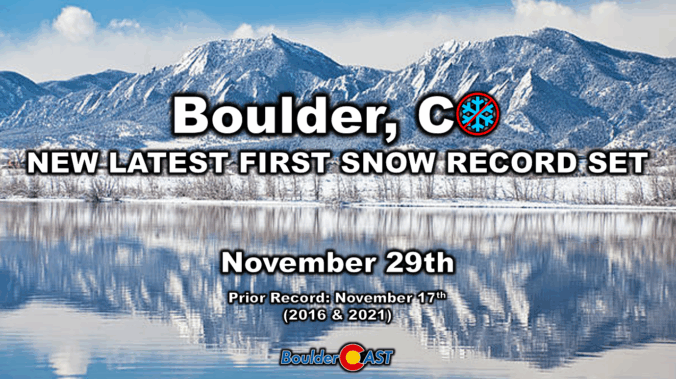
Boulder’s long snow drought has finally ended—just shy of a record streak. An Arctic front swept through early Saturday, dropping temps fast and delivering the season’s first flakes. Boulder picked up 0.3″, the latest first snowfall ever recorded in the city and it wasn’t even close. Curious how our forecast stacked up and what’s next? Spoiler: Another round of snow is already knocking on the door for Sunday.
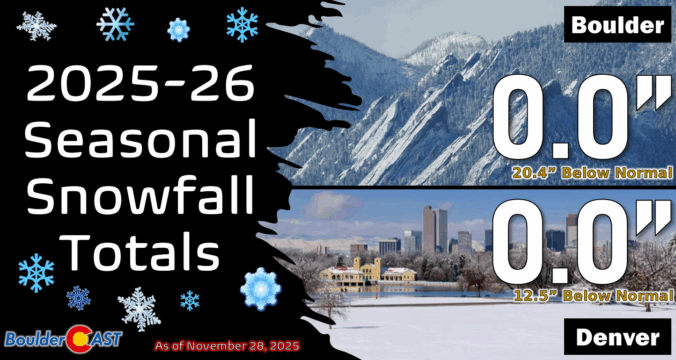
A big change is about to hit Front Range: after one more warm, breezy Friday, a strong cold front sweeps in overnight, dropping temperatures to the coldest of the season. Will Denver and Boulder finally see their first snow? That’s not guaranteed, unfortunately, but the Mountains are in for several fluffy inches and tricky travel ahead. Read on for the full breakdown—including details on the timing, our snowfall map, travel impacts and what lies ahead for our next wintry system on Sunday.

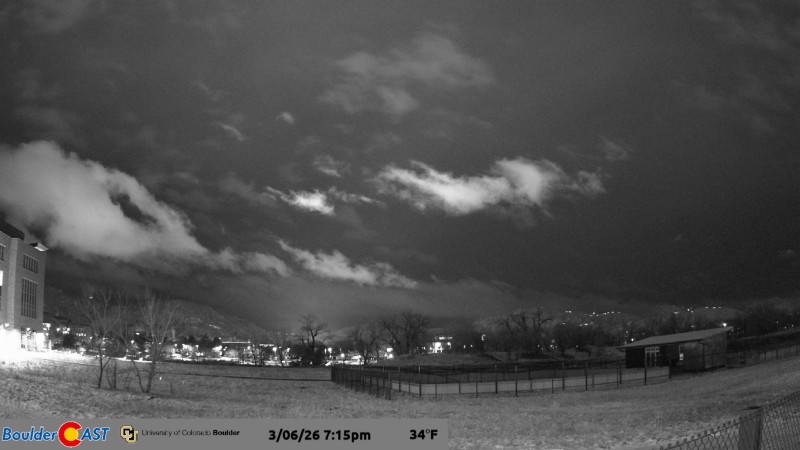
Live View of Boulder
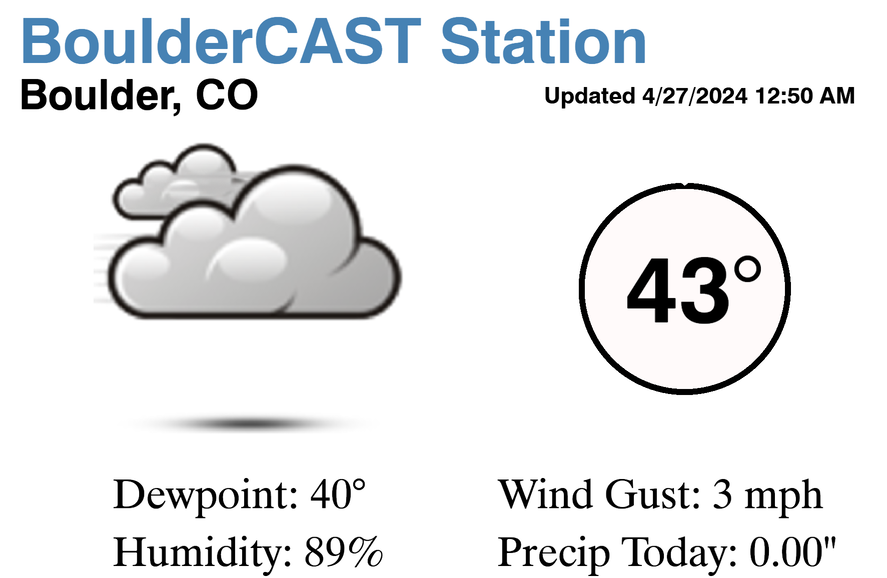
Current Conditions
Live Radar
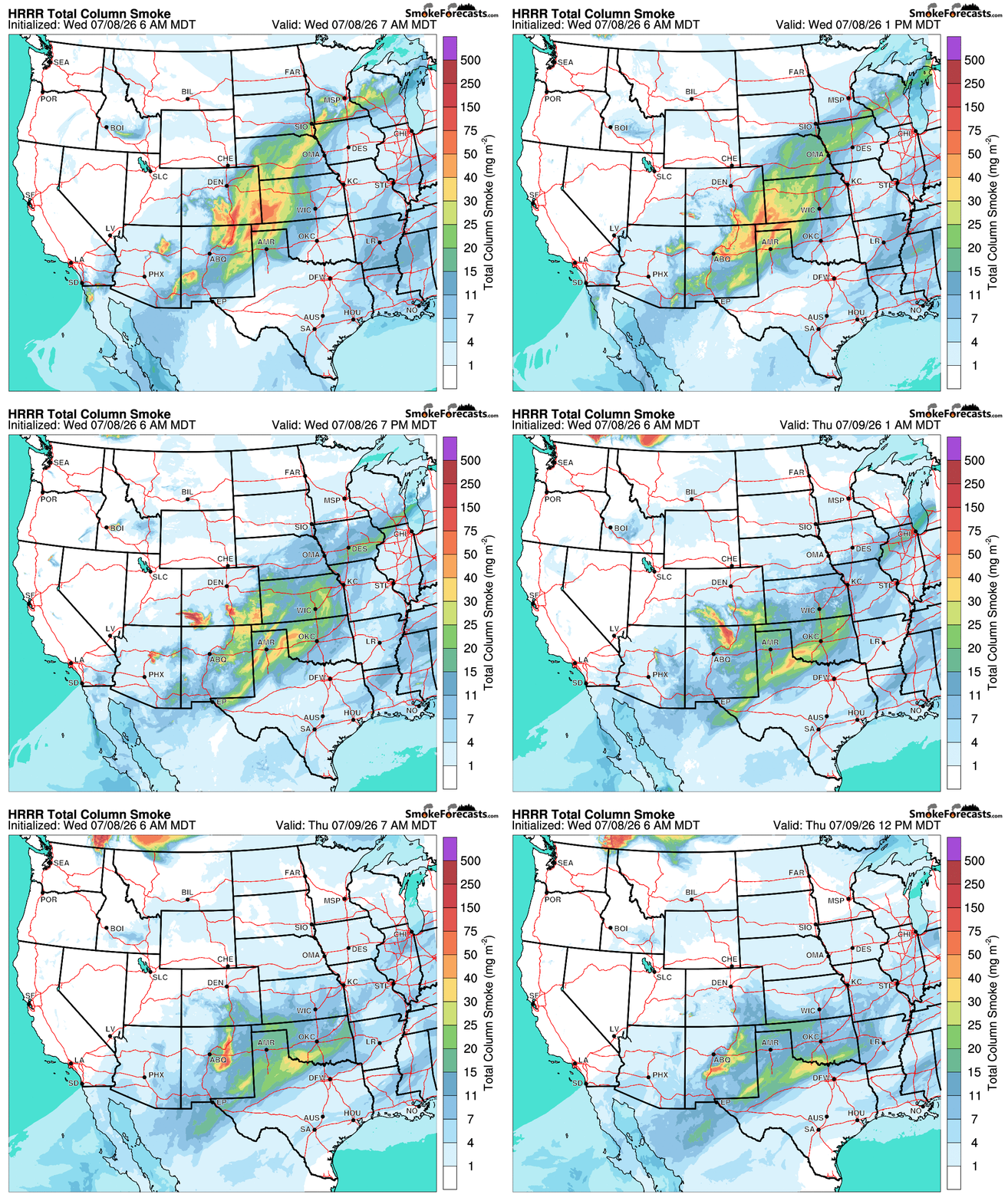
Latest Smoke Forecast
Recent Premium Posts

BoulderCAST Daily – Sun 10/25/26 | Some Wet Weather Tonight Into Monday But limited Wetting Rain
🌬️ Chilly and unsettled through Monday — An area of low pressure brings …
BoulderCAST Daily – Sat 10/24/26 | Chilly and Damp Through Monday
🌬️ Chilly, Unsettled Weekend — An area of low pressure brings pockets of …
BoulderCAST Daily – Fri 10/23/26 | Another Warm Day Before Unsettled Weather Kicks In
☀️ Warm to End The Week — Highs top out near 80 this …
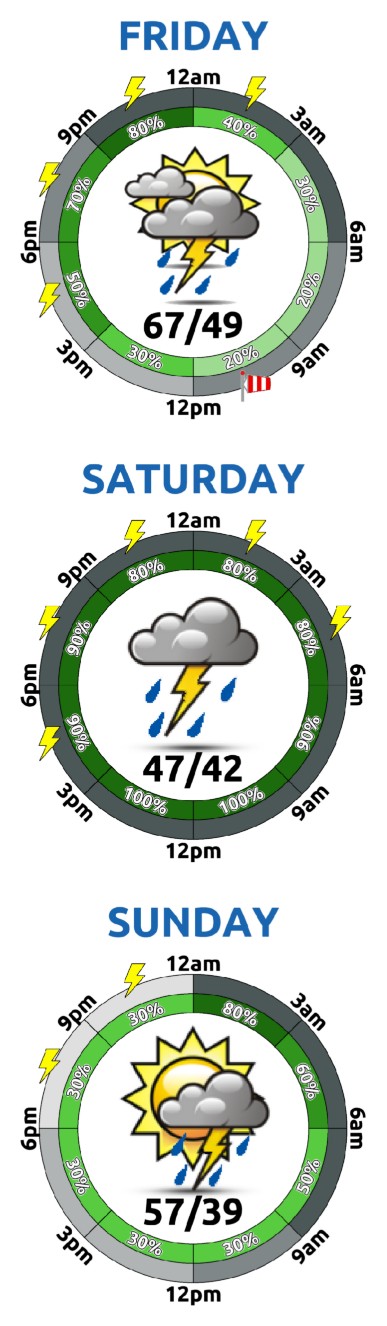
3-Day Forecast
Trending Content


© 2026 Front Range Weather, LLC