

One soaking rainstorm, zero snowflakes and Boulder’s 17th straight warmer-than-normal month. Our October 2026 Climate Review breaks it all down, plus a look at how 2026 is well on-track to be the warmest year in Colorado history.
Category: Monthly Recap (Page 1 of 5)
September 2026 will be remembered as the month that put an exclamation point on an extraordinary water year of heat and dryness in Boulder, with less than 20% of normal precipitation falling during the month and temperatures more than five degrees above average. Despite a strong late-season monsoon, moisture largely avoided the Front Range, and especially Boulder County, culminating with a great modeling collapse of a significant rain event in the final days of the month tied to the remnants of Hurricane Polo.
Here’s a graphical look at how September 2026 unfolded across Boulder, Denver, and the Front Range — and how it compared to climatology.
August 2026 was a month defined by brutal heat, episodic monsoon relief, intermittent smoke, and continued climatological extremes across the Front Range, with most of the West extending a long‑running warm anomaly that has defined the past year and a half. Boulder notched its 2nd‑warmest August on record, capping 15 consecutive months averaging above‑normal temperatures, and even tied its all‑time record high of 104°F during one of several extreme heat pulses. During the month, new records were also set for the number of 95° and 100° days in a single calendar year — a clear marker of how historically persistent the heat has been. The month also featured a brief but meaningful uptick in monsoon moisture, especially in the southern Denver Metro area, where localized downpours provided slight drought improvement and a temporary break from the otherwise parched pattern.
Here’s a graphical look at how August 2026 unfolded across Boulder, Denver, and the Front Range — and how it compared to climatology.
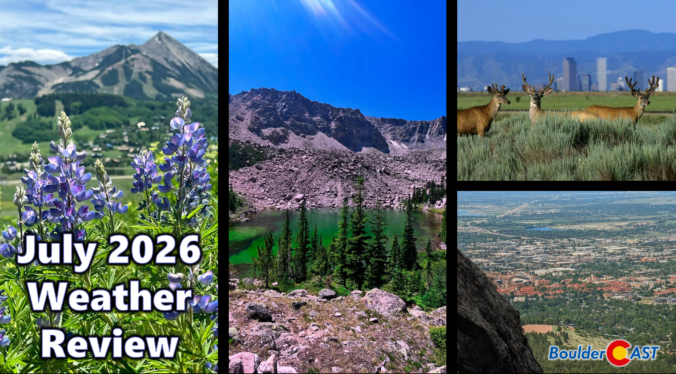
July 2026 along the Front Range was relentlessly hot, dry, and devoid of storms, dominated by stubborn upper‑level ridging that fueled long, punishing heatwaves and pushed Denver and Boulder into one of their hottest months on record. Occasional pulses of monsoonal moisture did break through, producing slow‑moving thunderstorms and localized flash flooding near vulnerable burn scars, while wildfire smoke from the West periodically dimmed skies and degraded air quality early in the month. With meaningful rainfall largely absent, Colorado’s severe drought deepened, cementing a July defined far more by heat and haze than by the usual rhythm of afternoon thunderstorms.
Here’s a graphical look at how July 2026 unfolded across Boulder, Denver, and the Front Range — and how it compared to climatology.
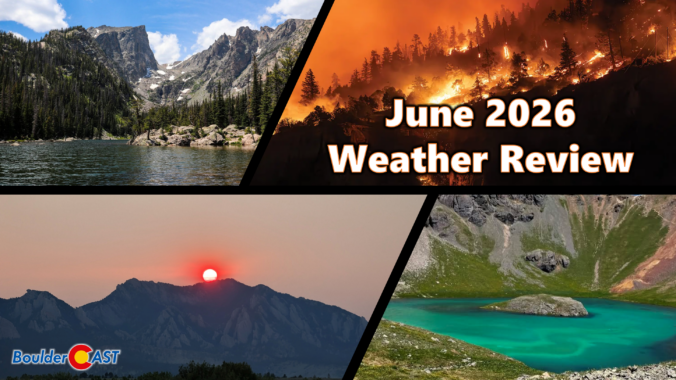
June 2026 closed out as a parched, smoky, and somewhat warm month across the Front Range, with Boulder seeing almost no meaningful moisture aside from a few late‑month storms — some of which dumped large hail across portions of the Denver Metro area. Day after day, smoke‑laden skies from both distant and eventually in‑state wildfires muted visibility and degraded air quality, a stark reminder of how the West’s exceptionally warm, snow‑deficient winter is now echoing across the region in the form of early‑season fire activity and persistent haze.
Here’s a graphical look at how June 2026 unfolded across Boulder, Denver, and the Front Range — and how it compared to climatology.
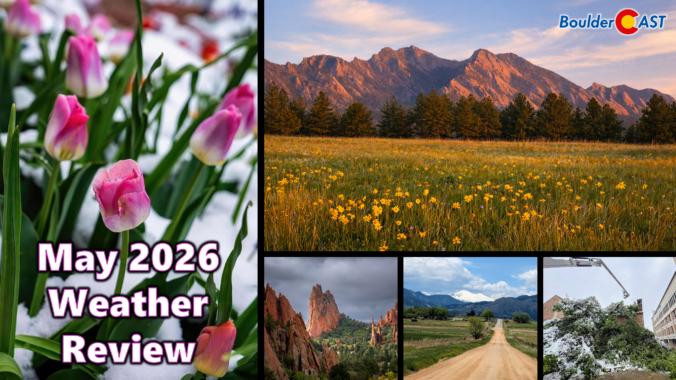
May 2026 delivered a true roller‑coaster pattern along the Front Range. Despite finishing warmer than average, the month was punctuated by two significant chilly precipitation events that funneled a remarkable amount of moisture into Boulder and Larimer Counties. The first arrived as a damaging late‑season snowstorm, wrecking leafed‑out trees across the region, while the second system — fortunately — remained all rain at lower elevations.
Together, these systems provided meaningful drought relief, though the broader hydrological picture across Colorado and the West remains deeply strained. Here’s a graphical look at how May unfolded across Boulder, Denver, and the Front Range — and how it compared to climatology.
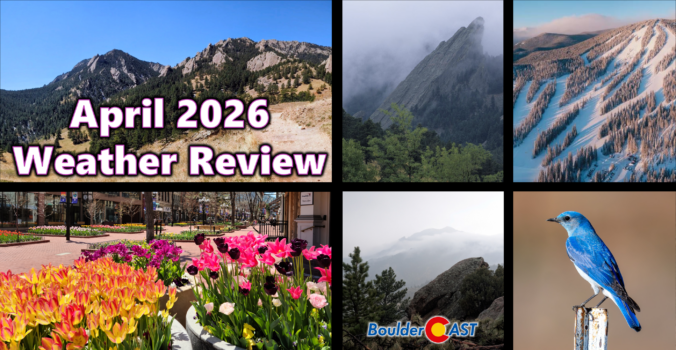
April 2026 wrapped up as another water‑starved month along the Front Range, trading March’s record heat for a parade of fast‑moving systems that looked promising on paper but rarely delivered meaningful moisture. Temperatures still ran warmer than average overall, punctuated by a few sharp cold fronts that briefly returned a wintry feel before the pattern snapped back to mild, windy, and dry. Fire danger stayed elevated on many days, and despite several rounds of light precipitation, Colorado’s snowpack remained historically low heading into May. Let’s take a graphical look at how April unfolded across Boulder, Denver, and the Front Range — and how it stacked up against climatology.
Live Radar
Trending Content


Recent Premium Posts

BoulderCAST Daily – Fri 11/13/26 | Quiet Today But Turning Unsettled Tomorrow
☀️ Quiet Today — Sunshine and low to middle 60s across the Front …
This Weekend in Colorado Weather: The Quiet Pattern Ends as Storm Activity Picks Up Across the West
After weeks of sunshine, mild afternoons, and storm systems repeatedly missing Colorado to …
BoulderCAST Daily – Wed 11/11/26 | Mild Days Ahead, But There Are Signs of a More Active November Soon
☀️ Warm & Quiet — Sunshine dominates through Thursday with highs rising from …
© 2026 Front Range Weather, LLC