

Sunday’s record-breaking November heat will give way to a dramatic cooldown on Monday, with temperatures plunging 20 to 30 degrees and wave clouds rolling in over the Front Range. The week ahead stays dry and mostly mild, but a few weak cold fronts will stir up some wind and day-to-day temperature swings. And while the forecast looks quiet for now, ensemble models are starting to hint at a colder, potentially snowier shift next week.
Category: Long-Range (Page 3 of 17)
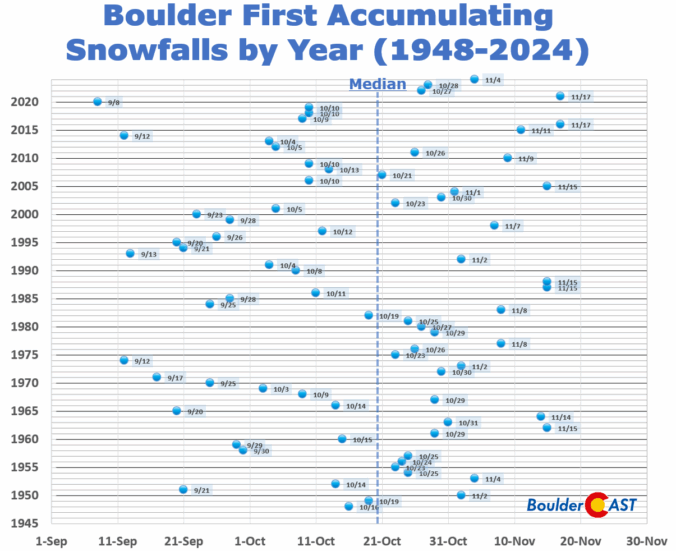
After a stretch of crisp, dry days to end the week, our weather is gearing up for a big warm-up this weekend, with near-record highs favored by Sunday. This developing warm and unfortunately dry pattern looks likely to stick around well into November. With each passing day, the odds grow that Boulder might challenge its record for the latest first snowfall.
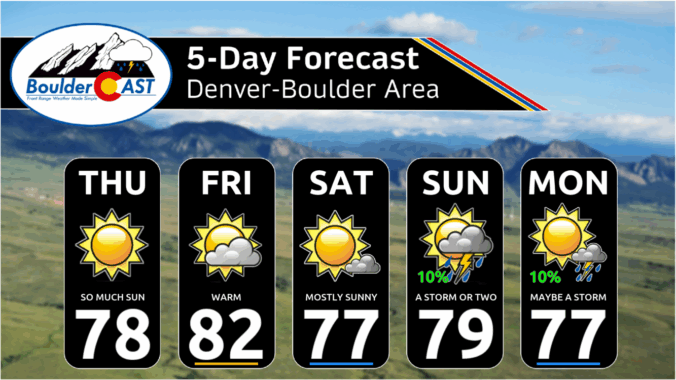
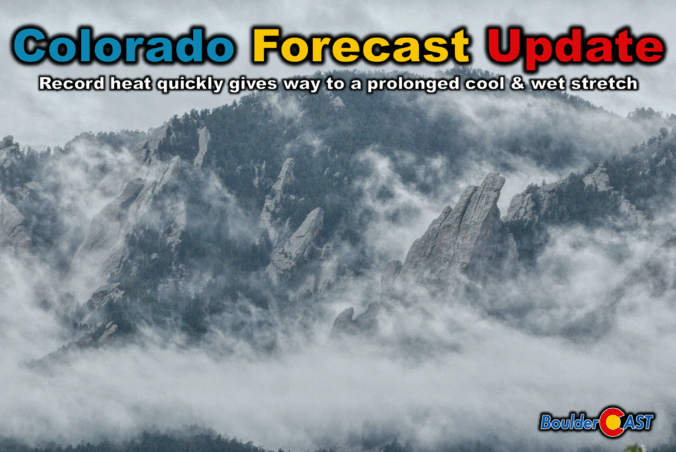
Thursday marks the final chapter of our late-summer heatwave, with record-challenging highs expected across the Front Range — but big changes are on the horizon. A cold front arrives tonight, ushering in cooler temps, a return of thunderstorms, and a wetter, more active pattern that could stick around well into next week. From sizzling heat to damaging hail, monsoonal moisture, and a long stretch of below-normal highs, today’s forecast update has a little bit of everything.
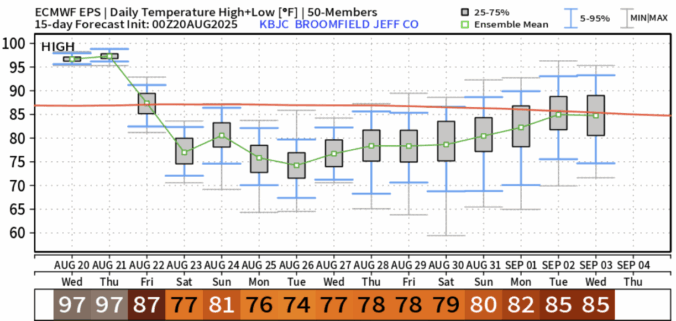
The Front Range is heading into a stretch of intense summer heat this week, with a dominant high-pressure system set to lock Colorado into several days of sizzling temperatures and dry skies. Expect highs in the mid to upper 90s every day through Friday. While Boulder isn’t guaranteed to break any record high temperatures, past patterns suggest we could run hotter than models are currently predicting—something worth watching as it would bump up the heat risks in the Metro area. Relief is on the horizon, though: a cold front late Friday should bring a sharp cooldown just in time for the weekend with at least low-end chances for storms returning.
This week will feature a mixture of calm and chaos in Front Range Colorado! While the early part of the week will be relatively quiet with cool temperatures, a significant change in our weather is brewing for Friday. An Arctic blast is set to slam eastern Colorado during the late-day period, ushering in the coldest air of the season this weekend alongside widespread snowfall. Enjoy the sunshine and mild conditions the next several days, but begin preparations for the deep freeze and snowy conditions ahead!
This week’s weather in the Front Range will see a shift from the recent unseasonably warm temperatures to cooler conditions, with periodic light snow expected in the Mountains throughout the week. While a white Christmas is unlikely for the Denver Metro area, there will be a slight chance of rain or snow showers Wednesday evening and night. The late-week period will remain active with several disturbances bringing more light snow to the Mountains, but the lower elevations around Boulder and Denver will stay mostly dry with mild temperatures. We also look ahead to next week when we’ll likely see a longer-term transition to much colder and snowier weather for the New Year.

Live View of Boulder
Current Conditions
Live Radar
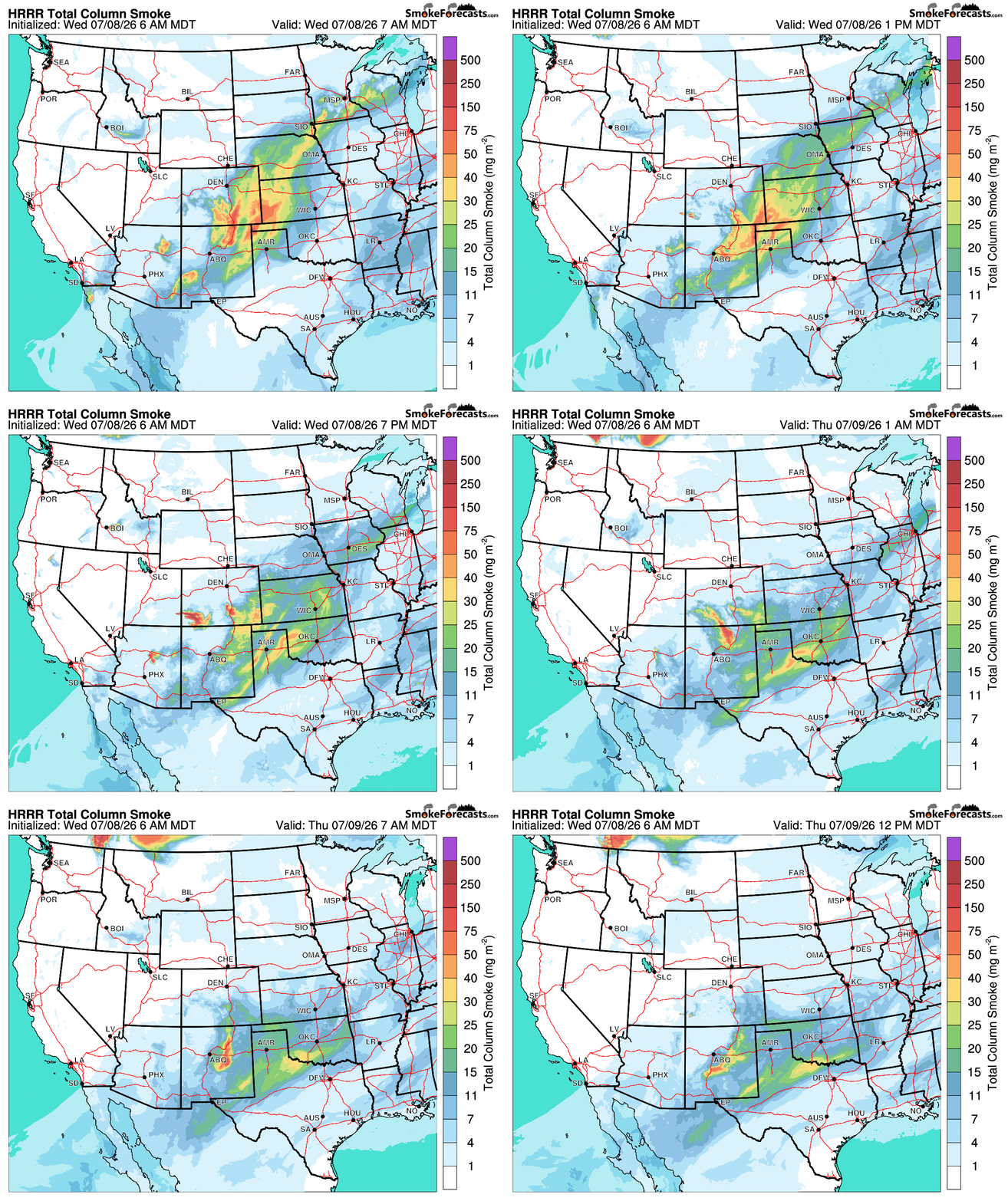
Latest Smoke Forecast
Recent Premium Posts

This Weekend in Colorado Weather: An Unsettled Stretch Ahead, But How Much Rain Will We See?
🌊 Historic Moisture Setup — A rare late-October pattern is pumping record moisture …
BoulderCAST Daily – Wed 10/21/26 | Record-Setting Southwest Moisture Event Underway, But Denver Stays Dry
🌊 Atmospheric Firehose Southwest — A rare combination of Pineapple Express moisture and …
BoulderCAST Daily – Tue 10/20/26 | 70s Return as Colorado’s Next Soaking Storm Targets the San Juans (Again)
🌤️ Dry & Warmer – Mountain rain and snow showers continue today, but …
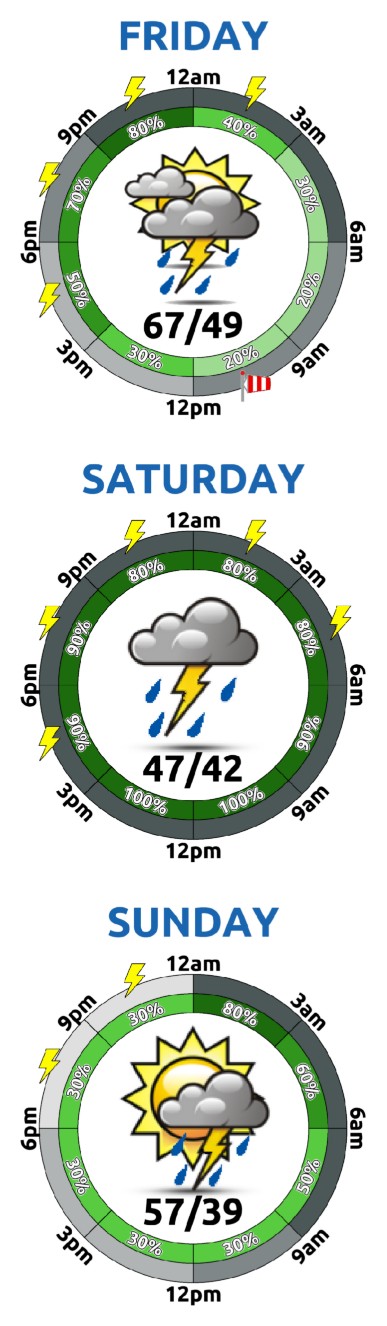
3-Day Forecast
Trending Content


© 2026 Front Range Weather, LLC